Adsforblog

Friday, April 5, 2013

BPR LIT TRIP 5 with Chad Davidson


In “The Death Poem You Asked For,” the Steiny Road Poet thinks that Chad Davidson is messing with the reader or at least the you to whom the poem is addressed. The poem, one of two by Davidson published in volume 40 of the Birmingham Poetry Review, hints  in the beginning line with the word ironic—“Largely ironic, the image persists”—that things may be contrary or opposite to what one would expect. Certainly in a journal where the featured poet, Claudia Emerson,  sets the tone for elergy and BPR editor-in-chief Adam Vines and his staff have selected numerous poems dealing with loss through death, grief, and the celebration of departed friends and well-known contributors to our culture, one might guess from Davidson’s title that this poem will be a memorial tribute.

In this one-stanza-long free-verse poem of 25 lines written by an omniscient narrator most of the verbs are in the present tense. Some man known to the you—the narrator refers to this acquaintanceship in these words “the last year you cared about him”—is imagined as a prophet with “hair done up for the summer,” wearing “the severe garments/in the capital city of the unloved.” This man at some literal dark hour seems to be mixed up with political intrigue, blackout dates, rush hours, squadrons of mosquitoes, and harassment of a priest. However, the narrator indicates:

…Whatever he does,
he does it everywhere: in the gleam
of a Pontiac up on blocks, in tight jeans
and the legs within, in Cincinnati somewhere,
where a couple of other things happened
last year…

And whether it is everywhere or a dull place like Cincinnati where not too many things happen, this man seems to be stalking the you.

…he’s outside your door now,
peering through the peephole, eyeing you
eyeing him, asking, with the nonchalance
of an alchemist hovering over his cauldron
of lead, What shall I make you, dear?

This leads the Steiny Poet to wonder again about the persisting image of this man and the irony of it. Should the reader assume he is a larger-than-life ghost meriting discussion in the presence tense, located just on the other side…of You’s door, a mysterious man who might be able to turn lead into gold as any alchemist worth his salt might do? Or is Davidson, through his omniscient narrator, messing around and not producing the Voodoo necessary to expunge this annoying man from You’s life?

If the conundrum bothers you, Dear Reader, then focus on the Davidson’s lush turn of phrase:

self-absorbed as a child’s tongue,
desiring nothing but to hear itself
in the furious sameness of its fuselage.

The Steiny Poet loves the idea that the body of the child is named as fuselage. Here Davidson is talking about a temper tantrum the man is having. Later when Davidson declares that this man does what he does everywhere, the Steiny Poet couldn’t help thinking about how the layers of symbolic language had given this man a flying body like one that describes the interior of an airplane.

Here’s another example, perhaps a little less complicated, but it ventures into an area the Steiny Poet would identify as metapoetics:

Or maybe he turns some priest
into a beggar rattling his coins,
or hacks off like a butcher the gristle
of his sentences.

If one assumes that the sentences being spoken in this part of the poem refer to some unidentified priest, then the main character of  this poem is some how editing the indigestible words (gristle) coming from the priest. It is writerly comment on what one would assume is an oral scene where the priest is talking versus the main character reading and marking up a text. This edgy disconnect is what the Steiny Poet would label metapoetics.

Chad Davidson is a challenging read but slow down and bother. This poet is worth the effort.

Thursday, April 4, 2013

BPR LIT TRIP 4 with Caitlin Doyle


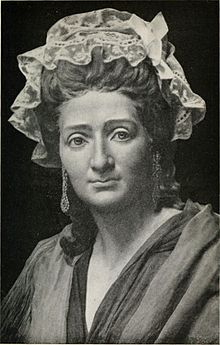
On day 4 of the Birmingham Poetry Review tour of volume 40, the Steiny Road Poet has decided to have some kitschy fun with the subject of death and has thereby selected Caitlin Doyle’s “Madame Tussaud.” The poem, one of two published in BPR 40, is a portrait of the great wax portrait maker who lived from 1761 to 1850. Doyle taps into the bizarre beginnings of Marie Tussaud’s wax modeling with these opening lines.

She made death masks of executed men,
their severed heads more real in wax than flesh.
Now wax herself, whatever she was then
is more unreal. She could be Mother Goose,

While the poet stays focused on the sculptress, the poem veers into the present day as Tussaud herself, rendered in wax and wearing her signature bonnet trimmed in lace, “meets” contemporary figures such as the British Heroin Chic model Kate Moss, the Chinese American martial artist-actor Bruce Lee, the “Material Girl” singer Madonna, and the drop-dead-gorgeous actor Brad Pitt.

What makes the poem notable is its form and craft. There are four quatrains with the rhyme scheme abac defe ghgi jklk. Most of the lines are ten syllables long. In her combination of words, Doyle employs a subtle sonic sensitivity  producing near rhymes like death and executed, couch and touch, closer and pose. The inverted repetition of death mask (from the opening line) in the last line—“alive enough to be a mask for death” gives the poem a wink of circularity.

Wednesday, April 3, 2013

BPR LIT TRIP 3 with Claudia Emerson


On Day 3 of the BirminghamPoetry Review tour of volume 40, the Steiny Road Poet looks at Claudia Emerson’s “Third.” BPR editor-in-chief Adam Vines chose Emerson as the featured poet for this 2013 volume. This includes an extensive bio and photo, six poems, a well-informed interview of Emerson by Susannah Mintz, and Shelly Cato's review of Secure the Shadow, Emerson's latest published book (Louisiana Sate University Press, 2012). For those not familiar with Claudia Emerson (and except for knowing the name, the Steiny Poet counts herself in this category), the assembly of these artifacts expands the reader’s understanding of an author though the Steiny Poet went first to Emerson’s poems, scanned them and then settled on and into “Third” without benefit of the supporting materials.

From the first line—“He survived the first beach landing and an entire”—the Steiny Poet felt drawn into this historically set narrative poem about a man living a metaphoric death. Without explicitly stating it, this poem describes how a World War II (Emerson only says world war) veteran suffering the effects of war comes home to work in a textile mill in “buildings/looming over the river, windows painted/ black during the war so they could run the third/shift he came to choose.”

To the contemporary reader, this scene of a mill with its blackened windows speaks immediately to the demise of the American manufacturing industry and the plight of American workers who came home from WWII to face a different kind of daily death. The scene also resonates strongly with the situation of today’s warriors who come home and cannot find jobs not to mention to their traumatized state of being. So while Emerson’s soldier survived (we can only guess at what he experienced since Emerson keeps the poem anchored in the present moment where the man has become a mill worker), the man, now a weaver, trying to wean himself from drinking and disturbing dreams—“easier he found/to black out the days…so that the hours/that had been for drinking or the dreams,” chooses the graveyard shift where the lint from the cotton gets into a worker’s lungs or hair “like a collective shroud.”

The poem ends with the soldier-weaver emerging from his work shift into “a world just lightening…the river/they all crossed running with the night’s dye.” Here the poem boomerangs to the beginning when the soldier survived the beach landing. Was it one of the Normandy landings at dawn where many American lives were lost?  Where the sea turned red with the blood of the fallen troupes? Emerson doesn’t provide those details but allows the reader free rein to connect the dots. Another thing this ending expands to is the myth of the River Styx, that Greek story that says the departed must cross this river to achieve a place in the afterlife. In Emerson’s poem everyone leaving the mill must cross the river polluted with the runoff dye but the way Emerson writes the line, the words they all could apply to anyone departing from any place-holding, time-defining, attitude-changing shift. And the last stanza is loaded with death inference in such words as graveyard, orphaned, ghost.  Even the word dye puns on the word verb to die.

The form of the poem is free verse organized into two interlinked stanzas. What the Steiny Poet means by interlinked stanzas is that the second stanza, without a blank line between it and the first stanza, begins with an indented line that takes its position from the end point of the line above. Here's what the end of first stanza and beginning lines of the second look like in "Third."

bleached to blinding, a collective shroud.
................................................................Graveyard shift
made them all equal, orphaned; those with families

The title of the poem refers to the third or night shift but it also might as well be an ominous pointing toward World War III and the situation we face with unemployment, loss of manufacturing jobs, industrial pollution, warriors with PTSD and addictive behaviors, just to name some of the contemporary problems Emerson’s poem made the Steiny Poet think of.

According to the interview Susannah Mintz did with Emerson “Third” tightly fits Emerson’s beliefs about what she is doing in her writing. Here are some quotes from Emerson in that carefully directed interview, “History is always a function of the present.” “I am extremely aware of the passing of time…” “…poetry is reclamation and restoration—and can be its own present tense.” When questioned about the possibility that all of her poems are elegies, Emerson answered, “ I don’t know that I have written many poems outside the loose category we can consider elegy. I remember Dave Smith, my editor for all six of my books, noticing when he read my very first book that the poems were uniformly elegiac in tone.”

Of course there is more to learn from the offering presented by the BPR on Claudia Emerson but for now the Steiny Road Poet will rest except to say that the Emerson selections certainly inform Satterfield’s poem “Resurrection Spell” presented in the first BPR Lit Trip post and to a lesser degree Ed Hirsch’s “Cemetery Gates” in the second BPR Lit Trip post. And just for a dash of levity since the subject matter of these poems weigh on the soul, all of these poems involve drinking and ghosts.


Tuesday, April 2, 2013

BPR LIT TRIP 2 with Edward Hirsch


National Poetry Month seems to be a particularly good time for the Steiny Road Poet’s journey through the Spring 2013 (number 40), the Birmingham Poetry Review (BPR). With a little fear about failure, the Steiny Poet would like to pledge that every day in this month, she will set aside time for poetry in order to discuss a poem selected from this handsome volume. Poetry reviews, which are a cross between anthology and newspaper, do not get much attention in the under appreciated art form of poetry. One other point of current day relevancy is that the BPR is a print journal and so there is less potential for audience than an online journal. The Steiny Poet won’t argue the merits of the online journal in this post but will merely note that even the most well-known poetry print journals have to consider going online for their longevity.

In picking the second poem for discussion, the Steiny Poet noticed that the organization of the BPR is strictly alphabetic except for the work of the featured poet (in this case Claudia Emerson) and an associated interview and review of the featured poet’s latest book of poetry. Alphabetizing serves its purpose making it easy to find poets that interest a reader and cutting down the time it takes the journal editors to assemble work by many authors. Also it equalizes the pecking order such that well-known authors, such as Edward Hirsch whom the Steiny Poet features in today’s post, are mixed with the lesser known.

“Cemetery Gates” by Edward Hirsch is a memory poem about the narrator’s first dead friend. Unlike Jane Satterfield’s “Resurrection Spell,” which the Steiny Poet discussed in BPR Lit Trip 1, “Cemetery Gates” is more celebratory with a critical edge than elegiac. In Hirsch’s poem, the dead friend in his immature youth (the Steiny Poet says here the poet is being judgmental or critical of his friend) is pictured drinking beer under the summer stars (and possibly in the graveyard where he used to run at night) versus Satterfield’s poem where the narrator finds ironic resurrection in a glass of ale as she tries to assuage the loss of the dear friend. While Satterfield, through the ritual keening of living friends, imagines the possibility that their dead friend might come breezing back into their studio kitchen (Satterfield’s poem must also be set back in the time of youth when living space was small for college students who could afford only a place with a tiny kitchen), Hirsch merely wonders “if the ghost of [his] track star [friend]…still races through the graveyard at night.”


Hirsch’s poem, as is his style (one my favorite Hirsch poems is “Wild Gratitude”), comes across in simple unadorned language. What is easy to miss because the poem does not rhyme is the end word repetition of the words star, friend, night throughout the four stanzas of tercets. Of particular note is the way the repetition is done. Stanzas one and four read star, friend, night while the interior stanzas read in reverse order night, friend, stars.


While Hirsch gives play to the word star to which he assigns track star (for describing his friend who loved to run) and stars—those heavenly bodies that shine at night, there is no attempt at metaphor. Even the title “Cemetery Gates” gets no larger meaning.

Because Hirsch is the author of How to Read a Poem: And Fall in Love with Poetry—this is a book that details why poetry matters, the Steiny Poet believes that anything Hirsch writes is worth the reader’s time.  However, no need to believe the Steiny Poet, have a look at quotations from How to Read a Poem which can be seen at a blog called Dionysian Generator, where the blogger quotes passages from the book and applies it to selected poems. Selection 1 and selection 2.  And remember, Dear Reader, you can read “Cemetery Gates” by Edward Hirsch in Spring 2013 issue of the Birmingham Poetry Review.

Monday, April 1, 2013

Lit Tripping Through the Birmingham Poetry Review


Here begins a journey through a journal the Steiny Road Poet values for many reasons. In the Spring 2013 (number 40), the Birmingham Poetry Review (BPR) published poems by 59 poets and several remarkable book reviews that are so well written and reasoned that the essayists deserve special attention. (Full disclosure, the Steiny Poet has read two of the books reviewed, helped publish one of the books, and wrote one of the collections of poetry.) Let the short quotations from these reviews speak for themselves.

Double Agent by Michelle Chan Brown as reviewed by Laura Eve Engel

“Brown’s speaker—a single speaker, it seems to me, who is unified in tone but nearly boundless in every other regard—often appears to be observing the party from above even as she is present... The omnipresence of the consciousness in these poems lends it self well to their content—she can move from Berlin to a Russian museum to the moon with ease and, perhaps more importantly, without explanation. She can also move with grace into quiet, more internal spaces, and it is in these spaces where it’s clearest that despite the delightful flamboyance of her un-truth telling, Brown is often working something that resembles a confessional mode.”

For the Mountain Laurel by John Casteen as reviewed by Jennifer Horne

“Perhaps my ear is overly attuned to the confessional mode, expecting resurrection through revelation or the appearance thereof. These poems frustrate that expectation, maybe intentionally so, forcing us back to the poem itself and not the author’s biography. To borrow a phrase from Sharon Olds, these poems are ‘apparently personal,’ drawn from the author’s life but not intended as literal diary entries. The poems evoke the feeling of someone passing through a crisis and, of necessity, focusing on the present rather than looking backwards or forwards, as though a sustain examination of what is will be more freeing than any other kind of analysis.”

How to Make a Bird with Two Hands by Mike White as reviewed by Alyse Knorr

“The most striking aspect of White’s work, to me, is how intelligently and playfully intertextual it is—bouncing between various schools, movements, and canonized poets to highlight his own aesthetic lineage. The effect is that of being at a party with a room full of your favorite poets—and White is an excellent host. He nods directly to Basho, Berryman, Li Po, Whitman, and Wright in titles and epigraphs, while injecting Frank O’Hara as a character into two poems.”

On a Bed of Gardenias:Jane & Paul Bowles by Karren LaLonde Alenier as reviewed by Brandel France de Bravo

“…I am impressed with Alenier’s ability to transform biography into finely wrought lyric poems of varying styles and textures. On a Bed of Gardenias contains highly condensed, whip-smart free verse (Riff on ‘A Quarreling Pair’); poems with longer, more conversational lines in the form of a letter (Agonizer); and poems that have chapters and gesture toward the novel (Hidden Messages: Paul Bowles introduces Jane Auer to his Family); or towards plays with acts (Drawing Room Comedy); a poem in tow columns (Yanked); a pantoum (Gift), and poetic forms of Alenier’s own creation.


The lit trip, if all goes well, will be a series of posts looking at as many poems as the Steiny Road Poet feels moved to examine without regard to their resting place in the BPR Table of Contents.

Jane Satterfield’s “Resurrection Spell” with the following epigraph from Muriel Rukeyser—“Too much life to kill” caught the Steiny Poet’s attention for the opening leg of this odyssey. The epigraph comes from Rukeyser’s poem “Suicide Blues” but the Steiny Poet does not see that Satterfield is talking about that kind of death. And by the way, as you, Dear Reader, might surmise from the Rukeyser epigraph,  “Suicide Blues” does not end in suicide. Satterfield’s emphasis in her poem is on the living, “the good friends who wish for resurrection” with such intense grieving that the expectation is that the dead one will “breeze back into the studio kitchen.”

In “Resurrection Spell,” the grieving which manifests by ritual, particularly a type of wailing known as keening, takes on a theatrical presence that mirrors “Suicide Blues.” Rukeyser’s focus is on woman vocalizing first with speech and then with singing. Satterfield begins with elegy, which can be either a poem or a song (and yes, this poem is an elegy), and rapidly moves to the musical landscape of song and choral practice, which she annotates as “these stagey ways to garb our grief.”

What is unusual about Satterfield’s elegy is the way it teaches the language of grief, defining such words as elegy and the verb to keen, and then tosses it back almost comically like a needed stiff drink after a good show. The narrator, despite philosophic aphorisms as “The universe at odds with our will” and “How the hardest thing in this world is to live in it,” begs off on how to achieve a spell that will “call the lost one to cross over” and thereby rise again as a living entity of “breath, blood, bone.” Except there is the keening that “lives on, a choral practice that came/ to accommodate all manner/ of praise and social critique.” What follows is a call for spirits to salute life and its after state: “Spell me with something/ auspicious, a glass of said ale, Abbey style, with its five types of barley malt, and the/ dormant hops the brewmaster brought back.”  So the only certain resurrection is the beer that has been brought back from inactive hops.